National Hospital Week: Supporting Hospitals in a Challenging Policy and Financial Landscape

From clinicians and technicians to administrative and support staff, hospitals are powered by committed individuals that share a common goal of caring for their communities.
As we recognize National Hospital Week and the more than 5,000 hospitals, healthcare systems and networks across the United States, it is important to celebrate the people who make healthcare possible, and to acknowledge the increasingly difficult environment in which they operate.
Proposed Medicaid cuts and coverage changes, combined with a $50 billion federal investment in rural health that experts say falls short, are adding new layers of financial uncertainty for hospitals already under strain.
Let’s discuss why hospitals are facing one of the most complex and financially constrained environments in recent years, and what it means for the future of care.
The Increasing Financial Strain on Hospitals
As the gap between the cost of delivering care and the reimbursement they receive widens, the financial performance of many hospitals is negatively impacted.
So, why is this happening? The American Hospital Association’s (AHA) 2026 cost of caring report reveals some of the reasons hospitals are facing financial issues:
- Rising labor costs: According to the AHA, labor is the largest expense for hospitals, accounting for 60% of total costs in 2025, up from 56% in 2024. Workforce shortages have forced hospitals to increase wages and rely on contract nurses, whose pay can be significantly higher than permanent staff.
- Underpayment from government programs: In 2024, Medicare reimbursed hospitals at just 83 cents on the dollar, resulting in more than $100 billion in underpayments. This gap places added pressure on the other payers to cover shortfalls to ensure that access isn’t eroded. From 2022 to 2024, general inflation rose by 14.1%, while Medicare net inpatient payment rates increase by only 5.1%, amounting to an effective payment cut over the three-year period.
- Administrative burden: In 2025, hospitals spent nearly $18 billion on overturning claims denials, and AHA estimates that hospitals spent $43 billion in 2025 trying to collect payments insurers owe for care already delivered.
- Increased costs for supplies and equipment: Total spending on supplies increased 9.9% in 2025, reflecting higher prices of everything from basic medical disposable gloves to ventilators and other technology used daily.
- Higher cost of medicines: Hospital drug expenses increased 13.6% in 2025, reflecting a rise in drug prices on existing medications and the rapid adoption of new, high-cost therapies.
- More patients, and sicker patients: Hospitals are delivering more care to patients who are sicker and more medically complex, with the larger share of hospital care being devoted to higher-acuity patients with multiple conditions, greater clinical needs and longer stays, according to an AHA/Vizient analysis.
These issues help explain why hospital expenses continue to rise faster than hospital prices. Hospitals have largely kept price growth below the rate of their input cost increases despite significantly higher labor and supply costs and increasing patient volumes and complexity. As costs continue to mount, their impact is becoming increasingly difficult for hospitals to absorb.
This growing disconnect between expenses and reimbursement is not sustainable and puts hospitals at increased risk of having to scale back services, ultimately threatening the access to care that communities depend on.
While these issues affect hospitals across the board, they are especially heightened for rural and community-based providers.
The Growing Crisis in Rural and Community-Based Care
Community-based and rural hospitals face unique financial challenges. Often serving as the primary access point for care in their regions, these hospitals encounter lower patient volumes and a higher reliance on government payers, making it more challenging to maintain positive margins.
Due to these financial constraints, some hospitals are forced to make difficult decisions about which services they can continue to offer. In some areas, essential services such as maternity care have been reduced or eliminated because they aren’t financially sustainable. And in even more severe cases, hospitals have closed, leaving communities with fewer options for care and longer travel times in emergencies.
The closing of a rural hospital has implications that go beyond providing care. In many areas, a hospital is often one of the largest employers of the community. So, when a hospital closes, jobs and economic stability are lost as well.
In 2025, the Rural Health Transformation (RHT) program designated $50 billion to help rural hospitals with the intention of restoring and revitalizing communities.
The money will be allocated across all states, spread out over a five-year period, with different amounts for each state. Half of the funding will be distributed equally among all approved states, and the remaining half will be allocated based on a variety of factors.
While experts do expect it to offer some support to struggling rural hospitals, it will most likely not be able to save them all. The main reason is that the amount is simply too low.
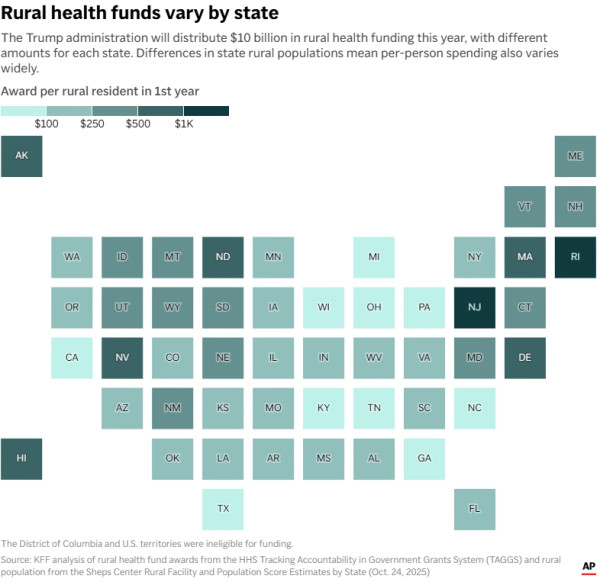
While the RHT program may provide some relief, other federal policy changes will likely create new challenges for hospitals nationwide.
Medicaid benefits for millions of Americans are at risk due to federal Medicaid funding reductions, and the new work requirements going into effect in 2027. These changes could increase uncompensated care for hospitals.
According to KFF, rural hospitals expect to lose approximately $137 billion in federal Medicaid spending in rural areas over the next 10 years.
Cuts to Medicaid funding over the next 10 years vary across states and Washington, D.C.:
- Ohio is facing a 13% cut, amounting to approximately $32 billion.
- Virginia is facing an 18% cut, amounting to approximately $29 billion.
- Maryland is facing a 12% cut, amounting to $14 billion.
- Washington, D.C., is facing a 9% cut, amounting to approximately $3 billion.
National Hospital Week: A Time to Reflect and Support
This week is the perfect time to say “thank you,” advocate for meaningful change, and recognize the incredible work being done by hospital employees, from the janitorial staff to the nurses and doctors. It’s also an opportunity for communities to stand with their hospitals, acknowledge their value, and urge leaders to support fair funding.
The long-term sustainability of our hospitals requires thoughtful policy decisions, stable funding and collaboration between healthcare leaders and policymakers.
Hospitals are essential institutions, providing care in moments of crisis, supporting public health efforts and contributing to the economic stability of their communities. Ensuring their future will require a shared commitment to addressing the challenges they face every day.
We encourage you to show support for your local hospital by using hashtags #HospitalWeek and/or #HealingHappensHere in your social posts. You can also visit aha.org to access the American Hospital Association’s National Hospital Week digital toolkit, which includes sample social posts and resources.